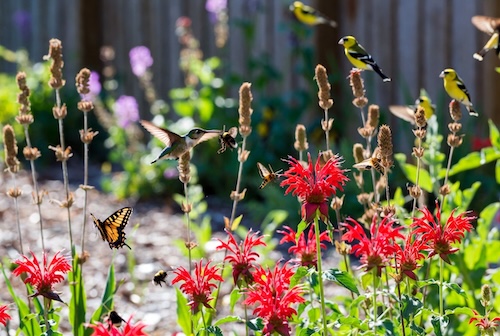
If you’re serious about self-reliance—growing your own food, supporting your land’s natural systems, and reducing reliance on store-bought everything—then planting native bee balm (Monarda) should top your list this year. One well-chosen native species can turn a quiet corner of your yard into a humming, buzzing hotspot during the hottest, driest stretch of summer when almost nothing else is blooming.
The nectar gap
Bee balm fills the critical “nectar gap” in July and August. Spring ephemerals have faded, fall asters and goldenrod haven’t started, and pollinators are desperate. Its tubular flowers are custom-made for ruby-throated hummingbirds—the exact depth matches their bills and tongues, and the scarlet red of Monarda didyma is the color they see best. Hummingbirds will spot a patch from surprisingly far away. But it doesn’t stop there: bumblebees, sweat bees, carpenter bees, leaf-cutter bees, monarchs, swallowtails, and even clearwing moths (those tiny hummingbird look-alikes) all feast on it. Come fall and winter, goldfinches and chickadees feast on the seed heads.
Best of all? It’s a true perennial that spreads gently by underground runners. Plant it once, and you’ll get more plants for free every year—zero annual seed or nursery runs required. That’s self-reliance in plant form.
Choose the Right Native Species (Skip the Hybrids)
Stick strictly to straight native species, not the fancy hybrid cultivars sold in big-box stores. Breeding for bigger blooms and brighter colors often reduces nectar quality and makes plants more susceptible to powdery mildew. Native species are tougher, more pollinator-friendly, and better adapted to your local soil and climate.
Here are the three most useful natives across most of the U.S. (hardy in zones 3–9):
- Scarlet bee balm (Monarda didyma) – The hummingbird magnet. Brilliant red flowers. Prefers average to moist, well-drained soil. Perfect if you have a spot that stays a little damper.
- Wild bergamot (Monarda fistulosa) – Lavender-pink blooms loved by native bees. More drought-tolerant once established. Ideal for average to dry soils and prairie-style gardens.
- Spotted bee balm (Monarda punctata) – Yellowish flowers with purple spots. Thrives in dry, sandy, or poor soils where other plants struggle.
Match the species to your site and soil. Check with your local native plant society or extension office for the best regional match—true self-reliance starts with plants that belong where you live.
Step-by-Step: How to Plant Native Bee Balm
- Pick the perfect spot
Full sun (at least 6 hours) is non-negotiable for maximum blooms and to prevent disease. It tolerates light shade, but you’ll get fewer flowers and leggier plants. Well-drained soil is key—amend heavy clay with a little compost if needed, but don’t over-fertilize. Natives thrive in average fertility; too rich encourages weak growth. - Timing
Plant in spring after the last frost or in early fall so roots can settle before winter or summer heat. Both work great. - Start with plants or seeds
- Potted plants (easiest for beginners): Buy from reputable native nurseries. Space 18–24 inches apart to allow good air circulation—this is your best defense against powdery mildew.
- Seeds: Direct-sow after frost or start indoors 6–8 weeks earlier. Press seeds lightly into soil (they need light to germinate). Keep moist; expect sprouts in 10–30 days.
- Planting basics
Dig a hole as deep as the root ball and twice as wide. Set the plant so the crown (where stems meet roots) sits level with the soil. Water deeply. Add a 2–3 inch layer of natural mulch (wood chips, straw, or leaf mold) to hold moisture and suppress weeds. Water consistently through the first growing season until established.
Low-Maintenance Care for a Self-Reliant Patch
Once established, bee balm is almost hands-off—exactly what a self-reliant gardener wants.
- Watering: Deep soak every 7–10 days during dry spells the first year. After that, M. fistulosa and M. punctata are quite drought-tolerant. Always water at the base to keep foliage dry.
- Dividing and spreading: Every 2–3 years in spring or fall, dig up clumps and divide them. The center of older plants can die out; dividing keeps them vigorous and gives you free plants to expand your habitat or share with neighbors. Unwanted runners pull up easily in spring.
- Disease prevention: Good spacing and air flow usually keep mildew at bay with natives. Remove affected leaves if you see any—no chemicals needed.
- Winter prep: Leave the stalks standing. Birds will thank you for the seeds, and the hollow stems provide overwintering habitat for beneficial insects.
No fertilizer, no pesticides. That’s the ecological beauty—bee balm works with nature, not against it.
Bonus Self-Reliance Perks: Tea, Medicine, and More
Don’t just grow it for wildlife. Bee balm (especially wild bergamot) is edible and medicinal. The leaves and flowers have a wonderful Earl Grey-like bergamot scent and flavor.
- Harvest tea: Pick fresh leaves and flowers in summer, or dry them for year-round use. Steep 1 tablespoon of dried herb per cup of hot water for 10–15 minutes. It’s soothing for digestion, colds, flu, nausea, and sore throats—antimicrobial and anti-inflammatory properties make it a homestead medicine-cabinet staple.
- Edible flowers: Sprinkle petals on salads or use in herbal honey infusions.
- Pollinator payoff: All those bees and hummingbirds will super-charge your vegetable garden and fruit trees with better pollination.
One Plant, One Summer, Endless Returns
Plant native bee balm this year and you’re not just adding a pretty flower—you’re building a resilient, living ecosystem right outside your door. Hummingbirds return year after year. Pollinators keep your food crops productive. Birds stay through winter. And you get free plants, free tea, and free entertainment.
In a world that pushes constant buying and replacing, bee balm reminds us that the best self-reliance comes from working with nature’s generous cycles. Plant it once. Watch your yard come alive. And enjoy the quiet satisfaction of knowing you’ve created something that truly sustains itself—and you—for years to come.
Ready to get started? Head to a native plant sale this spring, pick the right species for your soil, and watch your backyard become the best stretch of the season for every pollinator in the neighborhood. Your future self (and your wildlife neighbors) will thank you.